Data Management
Organise devices, ports, operating points, and generated elements in a project structure that is easy to review, share, and reuse.
Keep engineering data structured, not scattered
Rezonance treats the project as more than a file on disk. Devices, ports, operating points, and generated frequency-response elements stay connected, so the data produced during scanning remains useful when analysis or review begins.
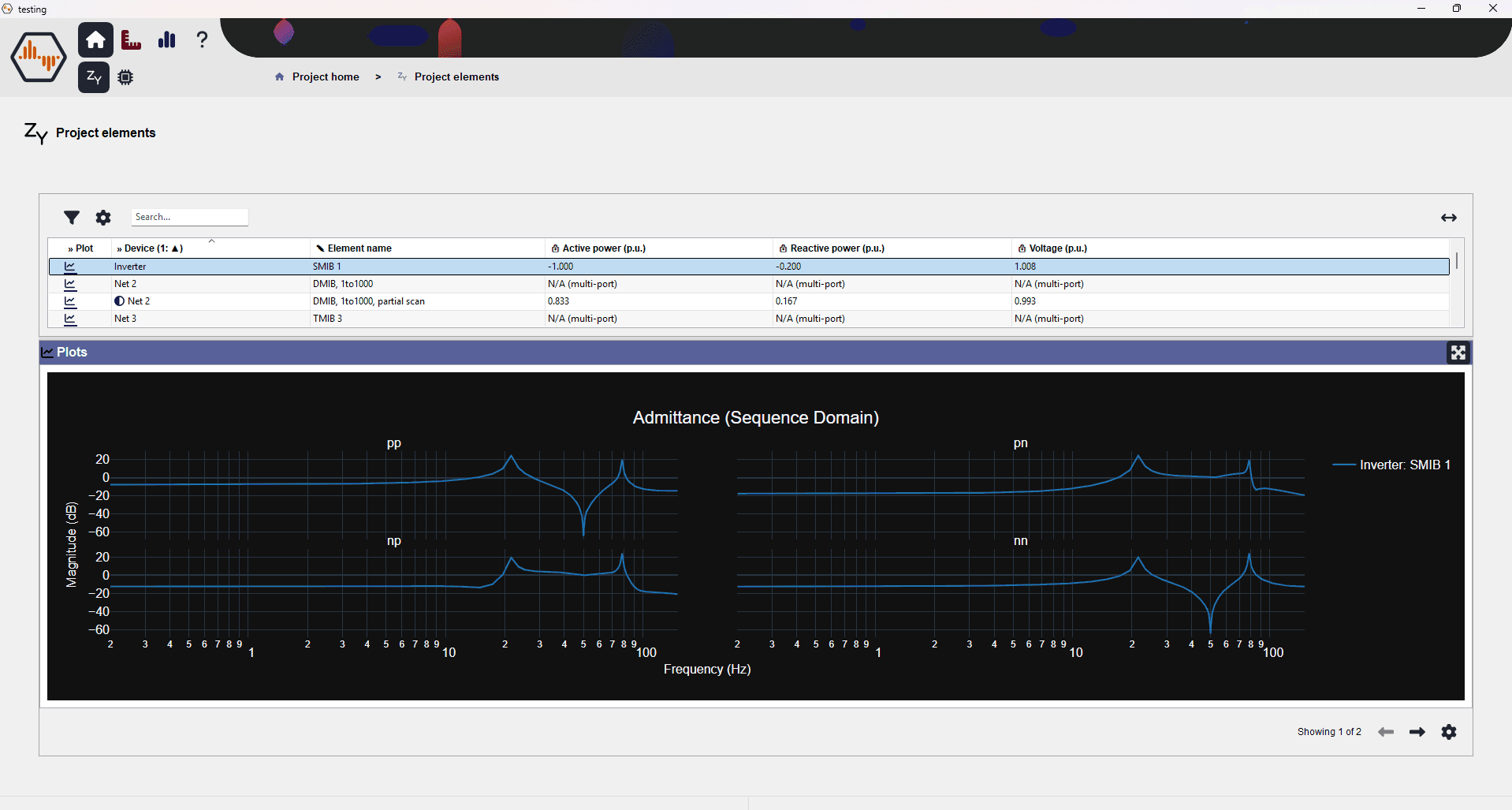
Impedance-based workflows quickly get hard to manage if naming, operating-point context, and import/export conventions drift between studies. Rezonance keeps that structure visible so teams know what they have, where it came from, and how to reuse it.
Devices and elements tied to their engineering context
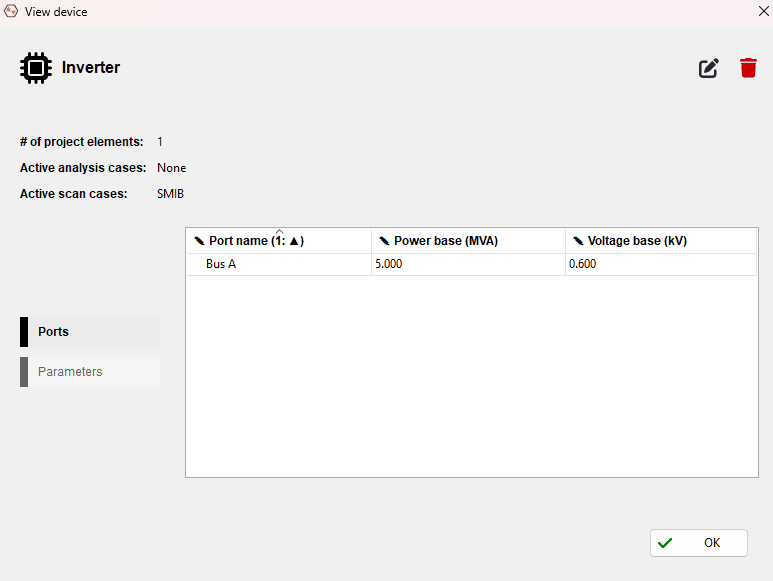
Devices inferred from PSCAD topology can be reviewed directly in the project, including port structure, power bases, voltage bases, and editable labels. You can also create devices from scratch to import element data without rebuilding the original scan model.
Once results are pushed from a scan case, they become project elements that can be exported, duplicated, compared, or shared. The same structure supports manual element creation and JSON import when source data already exists elsewhere.
What travels with the data
| Project data | Why it helps collaboration |
|---|---|
| Device definitions and port bases | Preserves the physical structure behind each element, not just detached frequency-response arrays. |
| Operating-point metadata | Makes repeated studies easier to compare across tuning choices, operating conditions, or network assumptions. |
| JSON import and export | Supports review and reuse across teams without forcing every contributor to recreate the original scan workflow. |
| CSV export for frequency responses | Makes it straightforward to move response data into external analysis or reporting pipelines. |
Parameterise the differences that matter
Device parameters let you track the settings that differentiate one generated element from another. That could be a controller gain, a filter setting, a commissioning variant, or another study-specific configuration. Combined with filtering in the project tables, parameters help teams review large sets of scans without losing sight of what changed between them.
Good data management is what makes repeated scan campaigns and stability investigations explainable months later.
For teams combining repeated scans, shared datasets, and downstream analysis, this project model is the glue that keeps the workflow coherent.
Keep exploring Data Management
Dive further into the Rezonance workflow, compare capabilities, and see how this feature fits into the broader analysis platform.
Explore all features